
Bank Statement Loans: The Best Way to Get Mortgage Approval Without Pay Stubs
For self-employed borrowers, the best way to get approved for a mortgage without traditional pay stubs is by using a bank statement loan. This alternative financing option allows lenders to verify income through bank deposits rather than W-2s or tax returns. Infinite Home Lending specializes in guiding self-employed clients in Maryland, DC, and Virginia through this process, ensuring your financial history is presented clearly to meet lender requirements.
What Is a Bank Statement Loan?
How Lenders Calculate Income
Lenders analyze the average monthly deposits over a specific period, usually 12 to 24 months. They subtract business expenses if the account is a business account, or they may use a gross deposit figure for personal accounts. This method captures the actual money entering your account, providing a more accurate picture of your ability to repay the loan.
Eligibility Criteria
While income verification is flexible, other criteria remain strict. Borrowers typically need a minimum credit score of 680 to 720. Loan-to-value (LTV) ratios are often capped at 80%, meaning you need a 20% down payment. This higher down payment requirement compensates for the lack of traditional income documentation.
Why Traditional Loans Fail Self-Employed Borrowers
The Deduction Problem
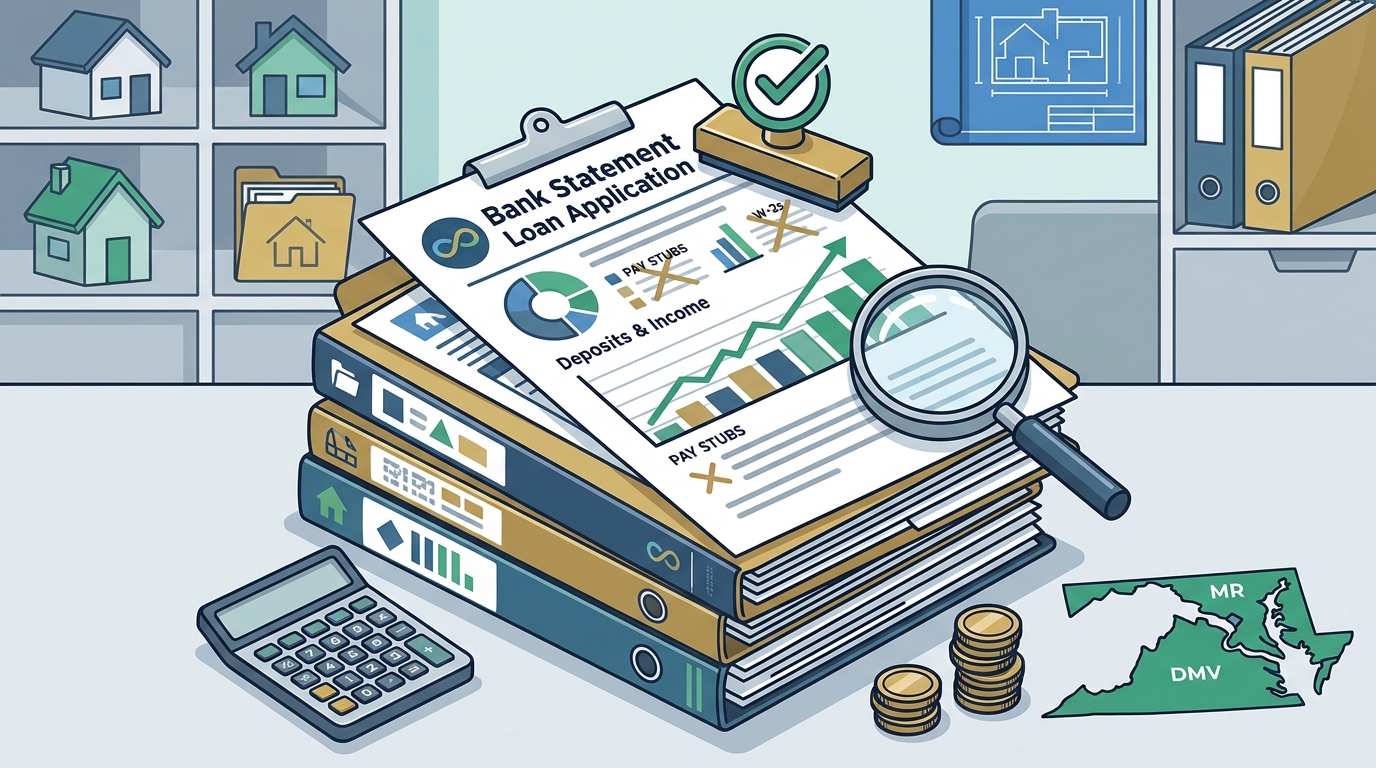
Tax deductions are designed to reduce tax liability, not to reflect true earning capacity. Depreciation, vehicle expenses, and home office deductions all lower reported income. Bank statement loans bypass this issue by looking at gross deposits. This distinction is critical for borrowers who have optimized their taxes but are now struggling to qualify for a mortgage.
Income Volatility
Self-employed income is often seasonal or project-based. Traditional lenders look for consistency, which can be a barrier for those with fluctuating earnings. Bank statement loans allow for a longer look-back period, smoothing out volatility and providing a more stable income average. This flexibility is a key advantage for borrowers in industries like real estate, consulting, or healthcare.
The Approval Process at Infinite Home Lending
At Infinite Home Lending, we understand the unique challenges self-employed borrowers face in the DMV region. Our process begins with a detailed financial review to determine if a bank statement loan is the right fit. We analyze your bank statements, credit profile, and down payment to structure a loan that aligns with your goals.
Document Preparation
Accurate documentation is essential. You will need to provide 12 to 24 months of bank statements, along with a letter from your bank confirming the statements are authentic. We help you organize these documents to meet lender requirements, ensuring a smooth application process. This attention to detail helps avoid delays and denials.
Matching You with the Right Lender
Key Considerations for Bank Statement Loans
Cost vs. Benefit
It is important to weigh the higher interest rate against the benefit of qualifying for a larger loan. For many self-employed borrowers, the ability to secure financing outweighs the slightly higher cost. We help you calculate the total cost of the loan over its life, ensuring you make an informed decision. This strategic planning is central to our advisory services.
Long-Term Strategy
Bank statement loans are often used as a bridge to traditional financing. After two years of consistent income, you may be able to refinance into a conventional loan with a lower rate. We advise clients on this long-term strategy, helping them plan for future refinancing opportunities. This forward-thinking approach ensures your financial plan remains aligned with your goals.
Key Takeaways
- Bank statement loans use bank deposits to verify income, bypassing the need for W-2s and tax returns.
- These loans are ideal for self-employed borrowers with high cash flow but low reported net income.
- A minimum credit score of 680 to 720 and a 20% down payment are typical requirements.
- Interest rates on bank statement loans are higher than conventional loans, reflecting increased lender risk.
- Accurate and complete bank statements are critical for a smooth approval process.
- Infinite Home Lending provides personalized guidance to match self-employed borrowers with the right Non-QM lenders.
- Bank statement loans can serve as a bridge to traditional financing after two years of consistent income.
Frequently Asked Questions
What documents are needed for a bank statement loan?
You will need 12 to 24 months of bank statements, a letter from your bank confirming authenticity, and a credit report. Tax returns may still be required for asset verification, but they are not used for income calculation.
Can I use business bank statements for a personal mortgage?
Yes, you can use business bank statements if you are the primary owner. Lenders will analyze the business deposits to determine your income. You may also need to provide a profit and loss statement to show business expenses.
How much down payment is required for a bank statement loan?
A 20% down payment is typically required for a bank statement loan. This higher down payment reduces the lender's risk and compensates for the lack of traditional income documentation.
Are bank statement loans available in Maryland, DC, and Virginia?
How long does it take to get approved for a bank statement loan?
The approval process typically takes 30 to 45 days, similar to conventional loans. The time can vary depending on the lender and the complexity of your financial situation. Working with a broker like Infinite Home Lending can help streamline the process.
Can I refinance a bank statement loan into a conventional loan?
Yes, after two years of consistent income, you may be able to refinance into a conventional loan. This can lower your interest rate and reduce your monthly payment. We advise clients on the best timing for refinancing.