
Soft pull pre-qualification is a preliminary assessment that estimates your borrowing capacity without affecting your credit score. Traditional pre-approval involves a hard credit inquiry that can lower your score by a few points. For buyers in Maryland, DC, and Virginia, understanding this distinction helps you explore options safely before committing to a formal application.
The Mechanics of Credit Inquiries
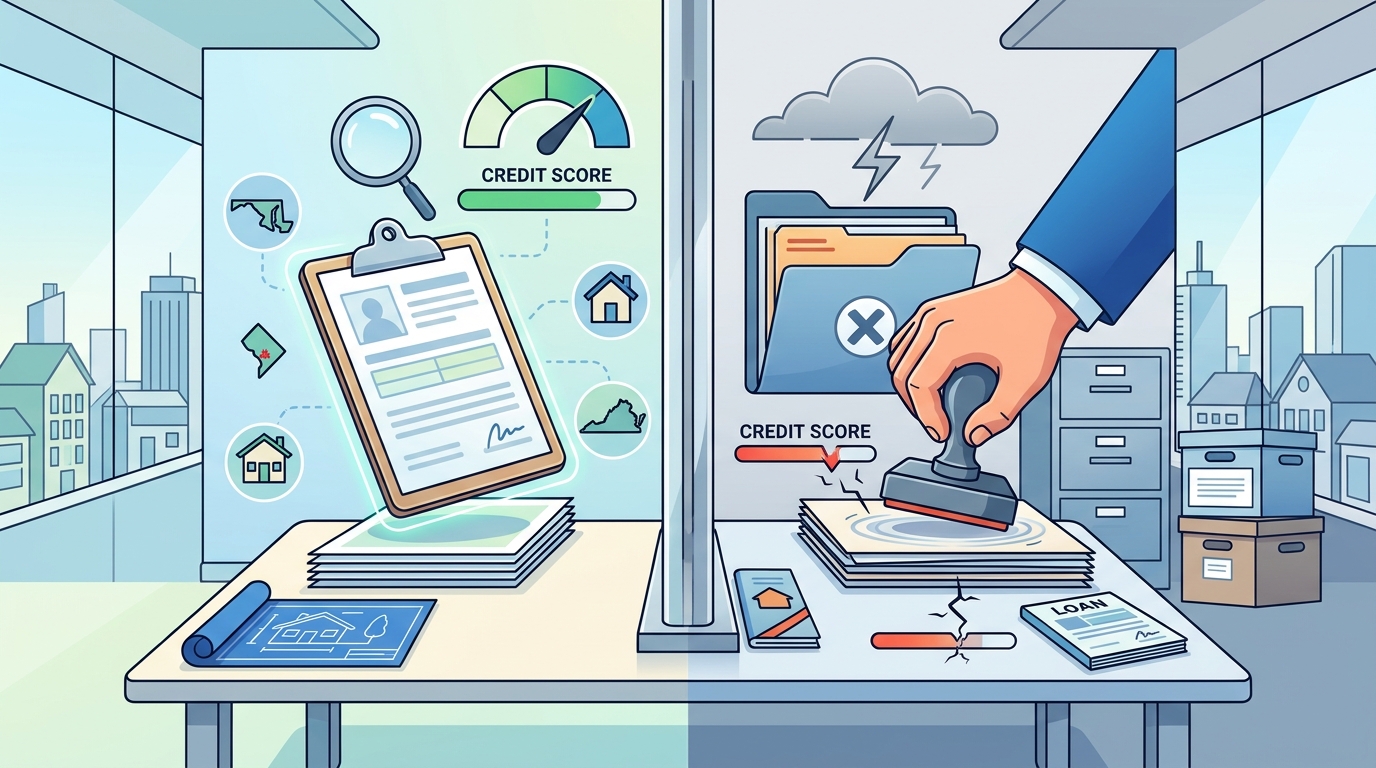
A hard inquiry is a request for your full credit report made by a lender during a formal application. This action is recorded on your credit file and can temporarily reduce your score by 5 to 10 points. A soft inquiry, by contrast, is a limited check that does not appear on your credit report and has no impact on your score. The primary difference lies in the depth of data accessed and the intent of the lender.
In the traditional process, lenders pull your credit to verify identity and assess risk immediately. This provides a precise rate and loan amount but locks in a specific financial snapshot. With a soft pull, the lender uses self-reported income and asset data to provide a general estimate. This allows you to gauge your buying power without the risk of a score dip before you are ready to apply. according to Credit Inquiries Financial
At Infinite Home Lending, we emphasize that the timing of your credit pull matters. If you are planning to buy a home within the next 12 months, a soft pull allows you to test the waters. You can see how much you might qualify for without the stress of a hard inquiry affecting your score during a critical window.
Accuracy and Lender Commitment
Traditional pre-approval is a stronger signal to sellers because it involves verified documentation. Lenders review your tax returns, W-2s, and bank statements to confirm your financial stability. This results in a specific loan amount that is guaranteed for a set period, usually 60 to 90 days. The lender is committed to lending you that amount, provided your financial situation does not change significantly.
Soft pull pre-qualification is less precise. It is an estimate based on the information you provide. It does not involve a full underwriting review. Therefore, it is not a guarantee of funding. However, it is an excellent starting point for budgeting. It helps you understand the range of homes you can afford before you gather documents for a formal application.
For first-time buyers in the DMV area, this distinction is crucial. You may not have all your documents ready. A soft pull allows you to get a ballpark figure. You can then use that figure to guide your search. Once you find a home you like, you can proceed to a hard pull pre-approval with confidence.
Impact on Credit Score and Timing
The impact of a hard inquiry on your credit score is usually small and temporary. Most credit scoring models treat multiple mortgage inquiries within a 14 to 45 day window as a single inquiry. This means you can shop for rates without significant penalty if you do it within that window. However, if you are close to a credit score threshold, even a small drop can affect your interest rate.
Soft pull pre-qualification eliminates this risk entirely. You can check your eligibility as many times as you want without affecting your score. This is particularly useful if you are not ready to buy immediately. You can monitor your buying power as your income or savings change. It provides a safe way to stay informed about the market.
Consider a buyer in Prince George's County who is saving for a down payment. They might use a soft pull to see how much they can borrow with their current savings. As they save more, they can update their soft pull estimate. This allows them to plan their purchase timeline without the anxiety of a hard inquiry. It is a low-stakes way to engage with the mortgage process.
The Role of Strategic Guidance
Traditional mortgage processes often focus on speed and closing. Lenders may push you to apply quickly to secure a rate. This can lead to rushed decisions. A strategic approach, on the other hand, prioritizes understanding your options before you commit. It involves analyzing your full financial picture to determine the best loan structure for your long-term goals.
At Infinite Home Lending, we use a structured process that begins with a strategic consultation. We do not start with rates. We start with your direction. We discuss your timeline, goals, and priorities. This ensures that every decision you make is aligned with your life plan. It is a calmer, more thoughtful way to navigate the mortgage process.
This approach is especially beneficial for buyers in competitive markets like Washington, DC. In these markets, having a pre-approval letter is important. But having the right pre-approval is even more important. We help you choose the loan structure that fits your life, not just the headline rate. This strategic guidance is a key differentiator in our service.
Choosing the Right Path for Your Situation
The choice between soft pull pre-qualification and traditional pre-approval depends on your readiness to buy. If you are actively looking for a home and plan to make an offer soon, a traditional pre-approval is the best option. It shows sellers that you are a serious buyer. It also gives you a clear budget to work with.
If you are in the early stages of planning, a soft pull is a better starting point. It allows you to explore your options without commitment. You can use the estimate to guide your savings goals. You can also use it to understand how different down payment amounts affect your monthly payment. This flexibility is valuable for buyers who are not yet ready to apply.
Many buyers use both approaches. They start with a soft pull to get a general idea of their buying power. Then, once they find a home they like, they proceed to a hard pull pre-approval. This two-step process allows them to move with confidence. It ensures that they are ready to make an offer when the time comes.
Key Takeaways
- Soft pull pre-qualification does not affect your credit score, making it a safe way to estimate your borrowing capacity.
- Traditional pre-approval involves a hard credit inquiry and verified documentation, providing a stronger signal to sellers.
- Hard inquiries can lower your credit score by 5 to 10 points, which may affect your interest rate if you are near a threshold.
- Soft pull estimates are based on self-reported data and are not a guarantee of funding.
- Strategic guidance helps you choose the right loan structure for your long-term goals, not just the lowest rate.
- Many buyers use a soft pull first, then proceed to a hard pull pre-approval once they find a home.
- Timing your credit pull is important, especially if you are planning to buy within the next 12 months.
Frequently Asked Questions
Does a soft pull pre-qualification affect my credit score?
No, a soft pull pre-qualification does not affect your credit score. It is a limited check that does not appear on your credit report. You can use it as many times as you want without any impact on your score.
Is a soft pull pre-qualification a guarantee of funding?
No, a soft pull pre-qualification is an estimate based on self-reported data. It is not a guarantee of funding. To get a guarantee, you need to proceed to a traditional pre-approval with verified documentation.
How much can a hard inquiry lower my credit score?
A hard inquiry can lower your credit score by 5 to 10 points. The impact is usually small and temporary. Most credit scoring models treat multiple mortgage inquiries within a 14 to 45 day window as a single inquiry.
When should I use a soft pull pre-qualification?
You should use a soft pull pre-qualification when you are in the early stages of planning to buy a home. It is a safe way to estimate your borrowing capacity without affecting your credit score. It is also useful if you are not ready to apply for a loan yet.
When should I use a traditional pre-approval?
You should use a traditional pre-approval when you are actively looking for a home and plan to make an offer soon. It provides a stronger signal to sellers and gives you a clear budget to work with. It involves a hard credit inquiry and verified documentation.
Can I switch from a soft pull to a hard pull later?
Yes, you can switch from a soft pull to a hard pull later. Many buyers start with a soft pull to get a general idea of their buying power. Then, once they find a home they like, they proceed to a hard pull pre-approval. This two-step process allows them to move with confidence.
Start Your Mortgage Journey with Confidence
Understanding the difference between soft pull pre-qualification and traditional pre-approval is the first step in a successful mortgage journey. At Infinite Home Lending, we provide the guidance you need to make informed decisions. We help you navigate the complexities of the mortgage process with clarity and confidence. Whether you are just starting to explore your options or ready to make an offer, we are here to help. Contact us today to begin your journey.